
If you’re thinking about jumping out of a perfectly good airplane for the first time, you’re probably asking the same question almost every beginner asks:
- What Does “Safe” Mean in Skydiving?
- Why First Timers Jump with Instructors
- Safety Gear Used for First-Timers
- Instructor Training & Regulation
- How First-Timer Safety Briefings Work
- The Role of Weather in Skydiving Safety
- What About Skydiving Accidents?
- Is Skydiving Safe Compared to Other Activities?
- Safety Tips for First-Timers
- Frequently Asked Questions
- Final Thoughts: So… Is Skydiving Safe for First Timers?
“Is skydiving safe for first timers?”
It’s a fair question — movies, viral clips, and rumors often make skydiving seem extremely risky.
But the real experience and modern safety environment tell a different story.
Let’s break it down in a calm, honest, and beginner-friendly way.
What Does “Safe” Mean in Skydiving?
Before we answer the main question, it’s important to define safety in context.
In skydiving, “safe” doesn’t mean zero risk — because no adventure sport, no aircraft activity, and no outdoor travel experience is zero-risk.
Safety in skydiving means:
✔ trained professionals
✔ modern safety gear
✔ certified instructors
✔ regulated dropzones
✔ clear training procedures
✔ strong equipment standards
So the real question becomes:
“How managed and controlled are the risks for first-time tandem skydivers?”
And the answer is: very managed, thanks to modern equipment and instructor training.
Why First Timers Jump with Instructors
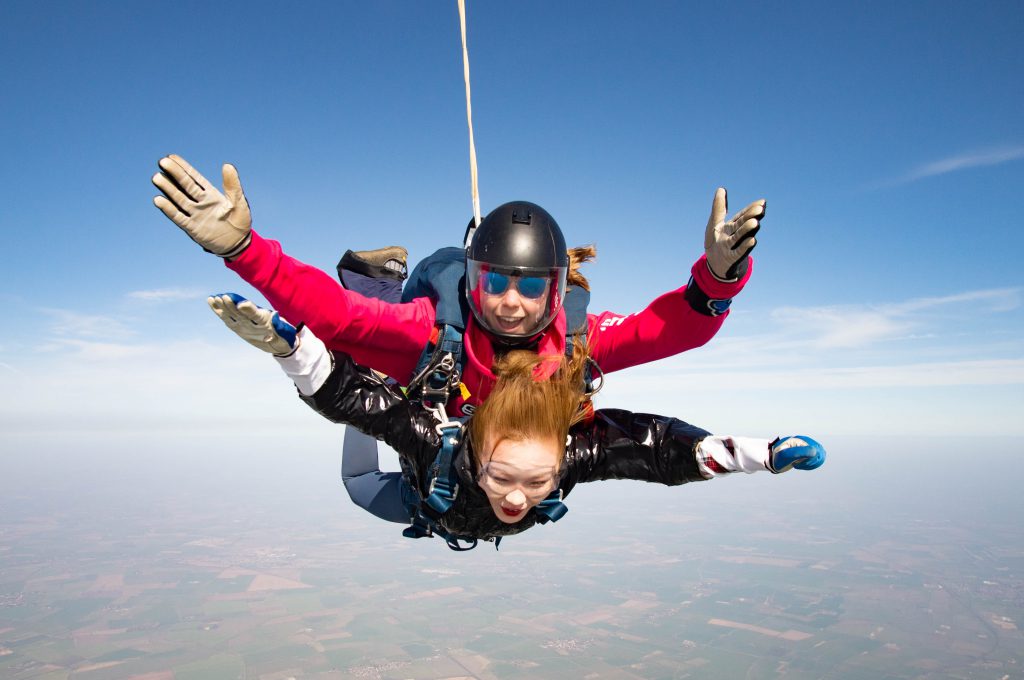
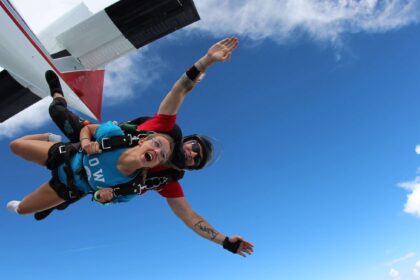
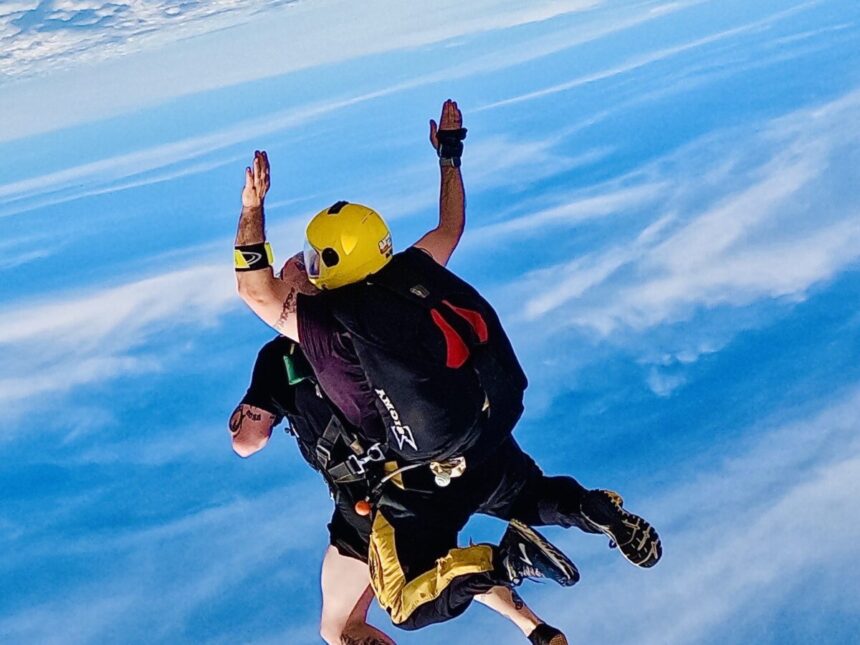
99% of first-time skydivers do a tandem jump, meaning:
- you are attached to a certified instructor
- they manage the exit
- they stabilize freefall
- they deploy the parachute
- they control the canopy
- they handle the landing
Your job is simple:
✔ follow basic instructions
✔ keep body position stable
✔ enjoy the jump
This structure exists for safety, not convenience.
Safety Gear Used for First-Timers
Tandem skydiving uses equipment designed for redundancy and control, including:
✔ Main parachute
✔ Reserve parachute (backup)
✔ Automatic Activation Device (AAD)
✔ Instructor harness system
✔ Student harness system
✔ Goggles and suit
The most critical part for first-timers is the AAD, which is a small digital device that:
➡ monitors altitude & speed
➡ automatically deploys the reserve parachute if needed
This adds an extra safety layer beyond human control.
Instructor Training & Regulation
Tandem instructors don’t just “know how to skydive” — they undergo:
✔ thousands of jumps
✔ emergency procedure training
✔ gear maintenance training
✔ student handling protocols
✔ certification processes
✔ continuing evaluations
Well-regulated countries require certification from organizations such as:
- USPA (United States)
- APF (Australia)
- BPA (UK / updated under British Skydiving)
- NZPIA (New Zealand)
- FFP (France)
- CSPA (Canada)
This keeps student experiences standardized and safe.
How First-Timer Safety Briefings Work
Before jumping, you’ll receive a brief training session covering:
✔ body position during exit
✔ freefall hand/leg positions
✔ how to hold during deployment
✔ landing instructions
✔ communication signals
✔ what to expect emotionally & physically
This briefing is designed so first-timers know exactly what will happen instead of guessing.
The Role of Weather in Skydiving Safety
Weather affects:
- wind speed
- visibility
- cloud ceiling
- landing conditions
- aircraft safety
This is why skydiving centers often delay or reschedule jumps — not because they’re unorganized, but because weather safety matters more than schedule.
If your jump gets delayed, that’s actually a good safety signal, not a bad customer experience.
What About Skydiving Accidents?
Skydiving is not risk-free. No adventure sport is.
But it’s important to compare perception vs reality.
Beginners often assume skydiving is extremely dangerous because:
- movies show malfunctions
- internet shows extreme stunts
- news headlines focus on rare events
However, if you want real data instead of myths, you can check our in-depth safety stats post:
👉 skydiving deaths per year worldwide
This gives a clearer picture of risk based on actual numbers, not fear.
Is Skydiving Safe Compared to Other Activities?
Without comparing numbers or statistics here, we can say:
➡ most regulated dropzones with trained instructors
➡ using modern equipment + AAD
➡ operating under national safety standards
➡ with mandatory reserve parachutes
…make skydiving a well-managed risk environment, especially for first-time tandem students.
Safety Tips for First-Timers
If you want the safest possible experience:
✔ Choose certified dropzones (not just cheapest)
✔ Pay attention during briefing
✔ Wear snug athletic clothing
✔ Listen to your instructor during exit/landing
✔ Ask questions before jumping
✔ Avoid heavy meals before flight
✔ Practice slow breathing if nervous
Confidence increases drastically once you’re informed.
Frequently Asked Questions
Is skydiving dangerous for first timers?
Skydiving has risk, but first-timers jump with trained instructors, modern gear, and safety protocols.
Is tandem skydiving safer than solo?
Yes. Solo requires training; tandem is designed for beginners under supervision.
Can you breathe in freefall?
Yes. Freefall airflow does not stop breathing.
What if the parachute doesn’t open?
Tandem rigs have main + reserve parachutes and AAD systems for redundancy.
Is skydiving scary?
Fear usually fades after the first few seconds of freefall — many describe it as exciting and controlled.
Final Thoughts: So… Is Skydiving Safe for First Timers?
Here’s the honest answer:
Skydiving is an adventure sport, which means it has risk — but for first-time tandem jumpers at regulated dropzones, it is a managed and controlled experience, supported by:
✔ trained instructors
✔ modern safety equipment
✔ reserve systems
✔ automatic activation devices
✔ national safety standards
✔ thorough briefing procedures
If you do your jump at a certified, reputable dropzone, you’re choosing the safest possible version of the experience.