
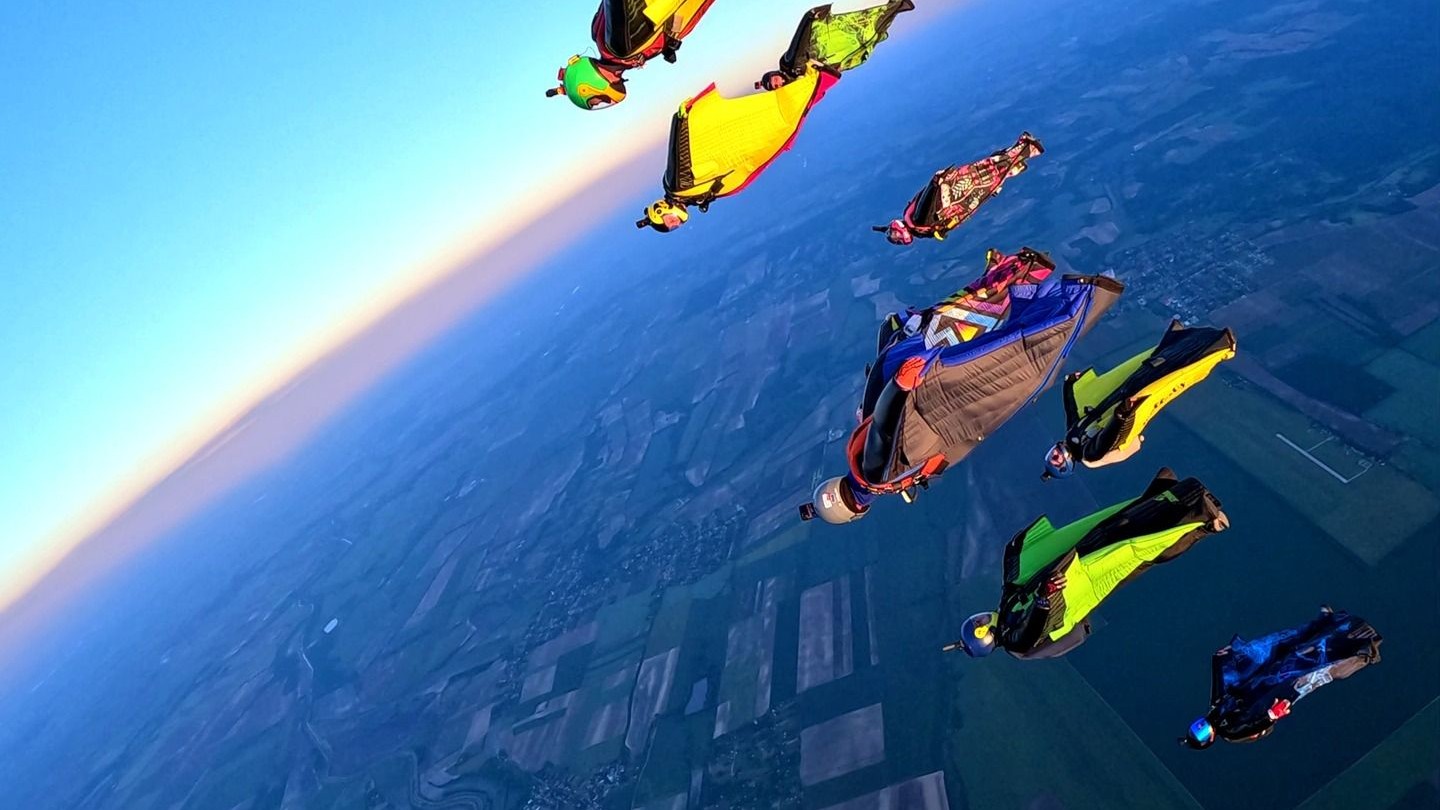
There is no experience in all of sport that looks quite like wingsuit flying. Those videos of humans gliding at over 100 miles per hour through mountain valleys, skimming cliff faces, and carving through canyons have captivated the internet for years. And somewhere in the back of almost every adventurous mind is the same quiet question: could I actually do that?
The honest answer is yes — but not yet. Wingsuit flying is not an entry-level experience. It sits at the top of a long, rewarding progression that begins with your very first skydive and builds through hundreds of solo jumps, multiple certifications, and years of developing aerial skills. The path is demanding. It is also one of the most extraordinary journeys available to any human being alive today.
This guide explains everything you need to know about wingsuit flying in 2026 — what it actually costs at every stage, what the training requirements are, how the sport works from a physics perspective, and whether this remarkable discipline could be in your future.
What Is Wingsuit Flying and How Does It Work?
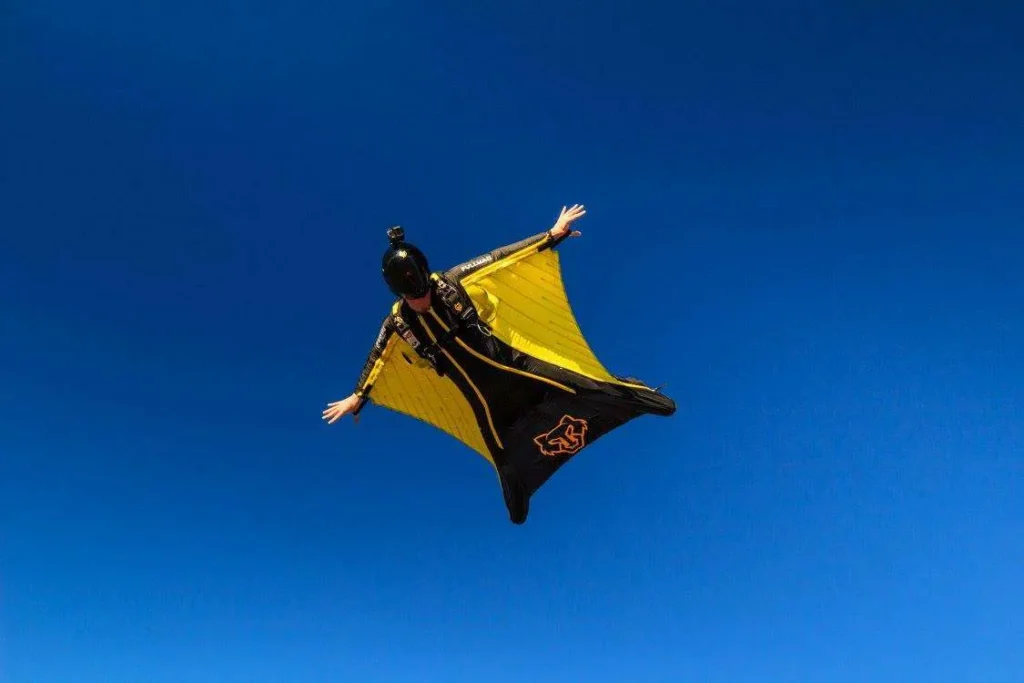
A wingsuit is a specially designed jumpsuit with fabric wings sewn between the arms and the body, and between the legs. When a wingsuit pilot exits an aircraft and extends their limbs, air rushes into the inflatable cells of the fabric, creating lift in a way that is similar in principle to an aircraft wing.
The result is a dramatic change in the physics of freefall. A standard skydiver falls at a terminal velocity of around 120 miles per hour in a belly-to-earth position. A wingsuit pilot, by contrast, can slow their vertical descent rate to as low as 25 miles per hour while moving horizontally at speeds of up to 100 miles per hour or more. The glide ratio — the ratio of horizontal distance covered to altitude lost — of modern high-performance wingsuits can exceed 3:1, meaning a pilot travels three feet forward for every foot they descend.
This is what creates the sensation of true human flight. Not falling through the sky, but gliding across it. For those who experience it, nothing else compares.
Wingsuit pilots control their direction, speed, and glide angle by subtly adjusting their body position — arching or de-arching the back, shifting arm angles, tensioning the fabric by extending or relaxing limbs. It is an incredibly nuanced skill that takes significant time and jump count to develop to a high level.
The Full Cost of Getting Into Wingsuit Flying in 2026

Here is where most people experience their first real surprise. Wingsuit flying is not something you can simply sign up for. It is the culmination of a long skydiving progression that involves obtaining multiple licenses, completing hundreds of jumps, and then adding the specific wingsuit training on top of everything else.
The total investment to reach wingsuit competency in the United States, including all licenses, training, and equipment, typically runs between $13,000 and $20,000 or more, spread across several years. Let us break that down stage by stage so the numbers make sense.
Your first skydiving license — the USPA A-License — requires completing the full Accelerated Freefall (AFF) programme, which costs between $3,000 and $4,500 at most US drop zones. This gets you 25 supervised jumps and your first independent qualification to jump at any USPA drop zone in the world.
After your A-License, you need to work toward the USPA B-License, which requires 200 total jumps, a night jump, and a water landing. Each self-supervised jump costs approximately $30 to $60 depending on your drop zone, so reaching 200 jumps represents a substantial additional investment on top of your initial licence cost.
Only after completing 200 jumps and holding at least a B-License can you legally and safely enrol in a Wingsuit First Flight Course (FFC). The FFC itself typically costs between $150 and $500, depending on the training provider, and involves classroom instruction on wingsuit aerodynamics, emergency procedures specific to wingsuit flight, and four to six coached jumps in a beginner wingsuit.
After the FFC, a new wingsuit costs between $800 and $2,500, with performance-oriented suits at the higher end of that range. Most beginner wingsuit pilots start on smaller suits with less surface area, which are more stable and forgiving as you develop your skills. As you progress, you will likely upgrade to larger, higher-performance suits that offer greater glide and more advanced flight characteristics.
Beyond the suit itself, you will need your own full skydiving rig, which runs between $8,000 and $14,000 new or $3,000 to $6,000 for a quality used setup. For many serious skydivers, purchasing their own equipment happens somewhere during the B-License phase, well before they reach wingsuit level.
To explore detailed breakdowns of costs at every stage of skydiving progression, visit Skydive Guides, where guides cover everything from your first tandem jump to advanced disciplines.
Wingsuit Training Requirements: What You Need Before You Can Fly
The USPA’s minimum requirement for wingsuit flying is 200 logged skydives. This is not an arbitrary number. It represents the volume of experience needed to have reliable, instinctive control of your body in freefall, solid parachute skills across a wide range of conditions, and the situational awareness to manage the additional complexity that wingsuits introduce.
Wingsuit flying changes many of the fundamentals you learn as a standard freefall skydiver. Your exit from the aircraft is different. Your fall rate is dramatically altered. The horizontal distance you cover during a jump is far greater than in standard freefall, which means your landing pattern planning needs to account for different geometry. Emergency procedures — specifically, the process of deploying your parachute while wearing a wingsuit — require specific additional training and practice.
The Wingsuit First Flight Course addresses all of these differences in a structured, coached environment. Wingsuit manufacturers and training organisations require proof of at least 200 jumps before enrolling anyone in an FFC. Some training providers have higher minimums and will ask to review your logbook before accepting you into a course.
Once you complete the FFC, you are qualified to fly beginner wingsuits under self-supervision. Many pilots then pursue further coaching at various stages of their progression — learning formation wingsuit flying, performance flying for maximum glide, or eventually, for the most advanced and committed pilots, wingsuit BASE jumping. Each of these sub-disciplines has its own training requirements and costs.
The Different Wingsuit Disciplines You Can Pursue
Wingsuit flying is not a single activity — it is a whole world of disciplines, each with its own community, competitions, and skill set.
Performance flying focuses on achieving maximum horizontal speed and glide ratio. Competitive performance flying is judged on time over a set course, exit speed, and average speed across the jump. World-class performance wingsuit pilots push the limits of what the human body can achieve in terms of gliding efficiency.
Formation wingsuit flying — sometimes called flocking — involves groups of wingsuit pilots flying in formation together, docking and separating in coordinated sequences. It is a technical and deeply social discipline that rewards patience, precision, and teamwork developed over many jumps.
Freestyle wingsuit flying incorporates aerobatic manoeuvres — barrel rolls, back flying, loops, and other movements — that turn the jump into an expressive, acrobatic performance. This is the discipline that produces the most visually spectacular footage and requires exceptional body awareness and skill.
Wingsuit BASE jumping is the discipline most people picture when they think of those mountain flyby videos. It is also the most dangerous and most technically demanding application of wingsuit flying, and is only appropriate for pilots with an extensive background in both skydiving and BASE jumping. It is not a step that comes early in anyone’s progression.
Is Wingsuit Flying Right for You?
Wingsuit flying demands patience, commitment, and a genuine love of the sport at every stage of the journey toward it. You cannot shortcut the 200 jumps. You cannot skip the AFF programme. You cannot bypass the B-License progression. Every jump you make along the way builds the skills, judgment, and situational awareness that will keep you safe when you eventually step out of the plane in a wingsuit for the first time.
The good news is that the journey toward wingsuit flying is genuinely rewarding at every stage. Learning to skydive solo, earning your A-License, building your jump numbers, exploring formation skydiving and freeflying — every phase of the progression is an experience in its own right. By the time you complete your Wingsuit First Flight Course, you will already be an accomplished skydiver with a rich collection of jumps and memories behind you.
If you are serious about getting into wingsuit flying, the best thing you can do right now is book your first tandem skydive and find a quality drop zone with a strong AFF training programme. That is where every wingsuit pilot’s journey begins.
Explore AFF programmes, drop zone comparisons, and skydiving progression guides at Skydive Guides.
Frequently Asked Questions About Wingsuit Flying
How many jumps do you need before you can fly a wingsuit?
The United States Parachute Association (USPA) requires a minimum of 200 logged skydives before a jumper is eligible to enrol in a Wingsuit First Flight Course. Most training providers also require at least a USPA B-License, which has its own additional requirements beyond jump count.
How much does a wingsuit cost?
A beginner wingsuit typically costs between $800 and $1,500. Intermediate and performance-oriented suits range from $1,500 to $2,500 or more. Most new wingsuit pilots start on a smaller, more stable beginner suit before progressing to larger, higher-performance designs as their skills develop.
Can anyone learn to fly a wingsuit?
In theory, yes — as long as they are willing to complete the full skydiving progression first. Wingsuit flying is open to any healthy adult who has completed 200 jumps, holds the appropriate license, and completes a certified Wingsuit First Flight Course. The sport is not limited by age, gender, or background, though the physical requirements of skydiving (minimum age of 18, weight limits, and general good health) apply throughout the progression.
How fast do wingsuit pilots fly?
Wingsuit pilots can travel horizontally at speeds of up to 100 miles per hour or more. Vertical descent rates can be reduced to as low as 25 miles per hour, compared to 120 miles per hour in standard belly-to-earth freefall. High-performance competition suits push both of these figures further.
Is wingsuit flying dangerous?
Wingsuit flying carries real risk, particularly at the higher levels of the sport. However, for pilots who build their skills systematically, follow USPA guidelines, complete proper training, and jump within their experience level, the risk is manageable. The safest wingsuit pilots are those who take the progression seriously and avoid rushing past any stage of their development.
What is the difference between wingsuit skydiving and wingsuit BASE jumping?
Wingsuit skydiving involves exiting an aircraft at altitude — typically 13,000 to 14,500 feet — wearing a wingsuit and parachute rig. The pilot glides through the air for a period of time before deploying a parachute and landing at the drop zone. Wingsuit BASE jumping involves exiting from a fixed object such as a cliff, bridge, or building, at a much lower altitude, with significantly less time to deploy a parachute. BASE jumping is dramatically more dangerous than skydiving and requires extensive experience in both disciplines before it should ever be attempted.
How long does a wingsuit jump last?
The duration of a wingsuit jump depends on exit altitude, the size of the suit, and pilot technique. A typical wingsuit jump from 13,000 to 14,500 feet might last 2 to 3 minutes from exit to parachute deployment, compared to around 60 seconds for standard freefall at the same altitude. High-altitude jumps in performance wingsuits can cover remarkable distances during that time.
Start Your Journey to the Sky Today
Wingsuit flying begins with a single tandem jump. Every great wingsuit pilot who has ever graced a cliff-side video started exactly where you are right now — on the ground, looking up, wondering if it could really be possible.
It is possible. But the path there is the point. Start your skydiving journey, find a quality AFF programme, and let the progression take you there naturally. Every jump makes the next one better.
Begin your adventure at www.skydiveguides.com and find the drop zone that will launch you on your way.